
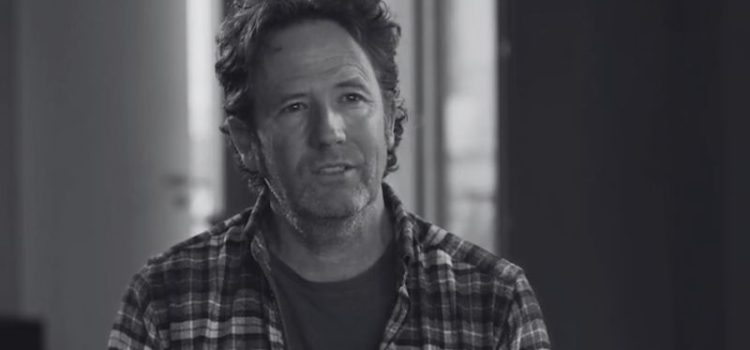
The traditional image of a South African Christmas is often one of sun-drenched braais and coastal escapes. But for filmmaker Jonty Acton, the festive season serves as a far more complex stage – a ritualized pressure cooker where what is not said carries more weight than the roast lamb on the table.
In a recent deep-dive interview, Acton revealed the DNA of his upcoming feature, The Reconciliation. It’s a project that sits at the intersection of personal memory and national identity, posing a discomforting question to its audience: How can we claim to be reconciled if we haven’t yet learned how to speak the truth?
From Galaxies Far Away to the Cape Town Suburbs
Acton’s journey to this film is a study in creative evolution. Like many of his generation, the spark was Star Wars, a childhood obsession that bloomed into a career spanning the London International Film School, independent documentaries and even a “B-movie” horror flick.
However, The Reconciliation represents a shift toward what Acton calls “social realism.” Moving away from escapism, he’s now turning the lens inward. As he puts it, it was important to come back and tell stories that dealt with South African identity, reflecting on the country’s long journey through a personal, localised lens.
The Table as a Battlefield: The Premise
The film is set over a single day, Christmas, in a multi-generational, privileged, English-speaking family home in Cape Town. The story was sparked by Acton’s own upbringing in a divorced family that continued to celebrate Christmas together in a strange, polite silence.
Acton uses the family unit as a microcosm for the South African state. The “reconciliation” of the title is two-fold:
The Personal through a family forced together by ritual, navigating decades of unspoken resentment and “inbred prejudices” as well as political – a reflection of South Africa’s broader post-apartheid journey. Acton suggests that like his childhood Christmases, the nation has “muddled through” without enough honest apologies or difficult conversations.
Cinematic Suffocation: The Visual Language
One of the most intriguing aspects of the project is its technical approach to storytelling. Acton cites two primary influences: Andrei Zvyagintsev (for the use of location as an antagonist) and Mike Leigh (for subtext-heavy character work).
The film’s visual arc mirrors the emotional entrapment of the characters. During “The Arrival,” when family members pull up to the home, the camera work is fluid, handheld, and filled with kinetic energy, representing the freedom of the outside world.
However, once the characters step “Inside the House”, the aesthetic shifts dramatically. The frame becomes “locked-off” and static. Stagnation begins to set in as the location itself —filled with inherited furniture and artifacts of privilege – starts to “suffocate” the characters, anchoring them to a past they are reluctant to interrogate.
The Discomfort of the “Liberal” Identity
Perhaps the boldest element of The Reconciliation is its focus on the white, English-speaking South African identity. While many South African films focus on “Big P” politics – heroic anti-apartheid figures or overt villains – Acton is mining the “iceberg” below the surface: the subtle, daily prejudices of the “polite” middle class.
The film doesn’t aim to be an “all-out attack”, but rather an investigation. Acton himself admits the project is a way of investigating his own prejudices.
“I’m not trying to blame anybody… I’m really starting with myself and saying, okay, I’m a white English-speaking South African. What does that mean? How have we contributed?”
The Legacy of Silence
To understand why this “social realism” is so potent, one must look at the psychological backdrop of South Africa’s journey. While the Truth and Reconciliation Commission (TRC) was a monumental effort to heal the nation, many argue its work remains unfinished in the private sphere. Despite political change, the legacy of the past persists in the numbers – as of 2026, South Africa remains one of the most unequal societies in the world. Acton’s film addresses the psychological side of these statistics, asking how generational wealth and “rigidity” -specifically in a city like Cape Town – prevent a truly new identity from forming.
Looking Toward Berlinale 2027
Currently in the final stages of a crowdfunding campaign and preparing for an October 2026 shoot, The Reconciliation is aiming for a premiere at the Berlin International Film Festival (Berlinale) in February 2027.
The film promises to be “the opposite of a Christmas story”. It’s an invitation to sit in discomfort, to look at the rituals we use to mask the cracks in our relationships, and to finally say what needs to be said. As noted during the interview, there is still so much to be mined in the nuances of our shared history. Acton’s film might just be the mirror that forces us to stop looking away.