
Film Critic: Stephen ‘Spling’ Aspeling
Chappie is Neill Blomkamp’s latest thought-provoking sci-fi actioner, following in the wake of Elysium and the revered District 9. Having been blown away by the latter, the duo ‘Die Antwoord’ felt an immediate synergy with Blomkamp, leading the zef rappers and the director to join forces. Adamant about being themselves on screen, the film was born from a simple, strange premise: what if Ninja and Yolandi raised a robot?
While both factions share a fierce desire to create original, raw entertainment with artistic merit, airdropping ‘Die Antwoord’ into Blomkamp’s universe was bound to spark conflict over artistic ownership. Chappie thrives on this tension—the collision of these two worlds both on and reportedly off-screen—creating a dynamic, visceral, and unpredictable atmosphere.
These creative energies unite to forge an “art-film blockbuster,” anchored by homegrown quirkiness and a spiraling exploration of consciousness. At times, the “clipboard reality” at the Tetravaal offices feels like the original ‘The Office’ – if Dunder Mifflin traded paper for robotics. Simultaneously, the overriding themes of human consciousness and a mechanized police force draw strong parallels to classics like RoboCop and I, Robot. Blomkamp relishes this blend of the real and unreal, which creates its own inherent tension. Perhaps this is why ‘Die Antwoord’ were such a natural match; their driving theme is to live in the unexpected and continually shatter illusions to create “real” moments.
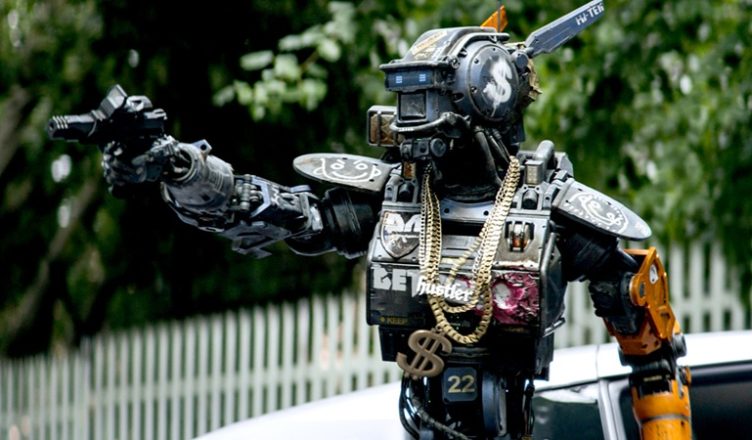
Sharlto Copley provides the voice and motion-capture performance for the reprogrammed droid. His physicality is impressive; he portrays Chappie’s evolution from child to teenager with profound understanding, even without the luxury of the facial-expression tech used by Andy Serkis in the Planet of the Apes reboots. Ninja and Yolandi Visser play Chappie‘s adoptive parents – essentially extreme variations of their stage personas. While their performances are raw, their sincerity and punk passion bridge the gap. Ninja delivers a nasty, unapologetic, and “adorable ahole” as Daddy, while Yolandi counterbalances him with pixie-like maternal instincts to win us over as Mommy.
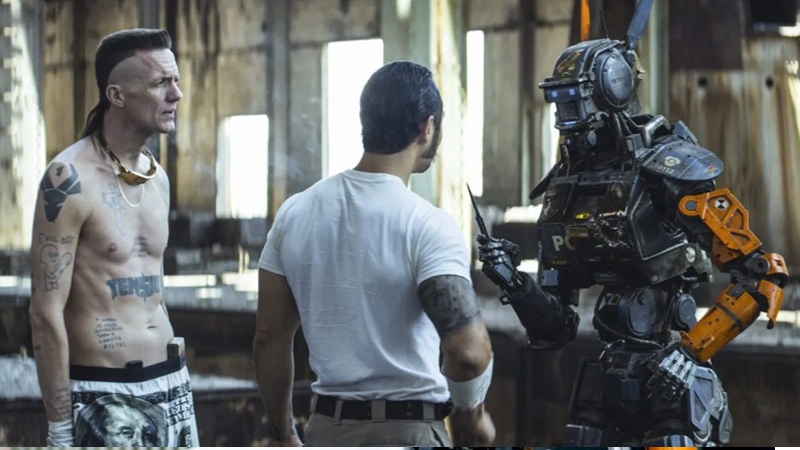
The supporting cast features a very “un-Hugh Jackman” Hugh Jackman, sporting a mullet and a thick Australian accent as the awkward villain, Vincent Moore. He owns the role like a blend of Captain Haddock and Bluto. Dev Patel plays his foil, Deon Wilson, a smart robotics engineer whose Scout program success infuriates Moore. Patel is one of the only likable human characters, acting as the “Maker” and the angel on Chappie’s shoulder. Sigourney Weaver adds sci-fi clout as CEO Michelle Bradley, while Blomkamp regular Brandon Auret delivers a ferocious performance as the gangland kingpin Hippo – a role that arguably deserved even more screen time.
While flirting with sci-fi comedy, Chappie never strays too far from its action roots. The CGI is brilliant and deceptively effortless; you never doubt the droids’ presence in the cyberpunk Johannesburg landscape. The soundtrack is just as bizarre as the film, crushing action scenes with the powerful, impending doom of Hans Zimmer and peppering the rest with rap-rave tracks from ‘Die Antwoord’. This eclectic mix reflects the film’s identity crisis, carrying Chappie from innocent child to pistol-packing gangster.
Being South African certainly helps in navigating the diverse accents and local slang, but the film’s heart – a dysfunctional family story exploring morality – has universal appeal. The crux is this: ‘Die Antwoord’ thinks this is a Die Antwoord film; Neill Blomkamp thinks it’s a Neill Blomkamp movie. The band’s tattoos, branding, and music stings sometimes make the film feel like a vehicle for mass exposure. While this occasionally hurts the narrative, it’s hard to imagine the movie having the same edge or “spunk” without them.
It’s a “bad marriage” that gave birth to a bold, quirky and unapologetic sci-fi action comedy. It may not feel like Blomkamp’s original vision, but it holds enough raw entertainment value and pulpy substance to keep us locked in. The pop culture influences are treated in a fresh manner and, while somewhat messy, Chappie stands alone: loud, proud, and unique.
For more film reviews, visit SPL!NG.