
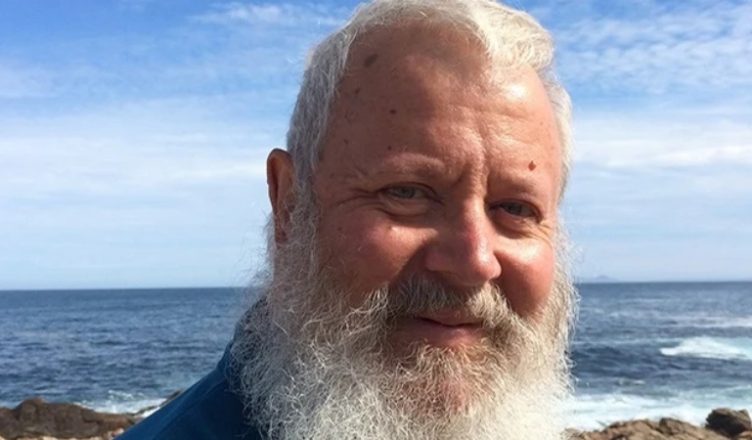
Before an audience relied on the aggregate hum of Rotten Tomatoes or the algorithmic streaming slideshow, South African cinema-goers looked to a single, unmistakable compass: the twinkle in Barry Ronge’s eye, the flair of an elaborate waistcoat and prose that could carve a masterpiece into public consciousness or fillet mediocrity with velvet-gloved precision.
For nearly four decades, Ronge did not merely review films; he cultivated a national literacy for cinema. In an insightful conversation on CapeTalk with Pippa Hudson, two people deeply bound to Ronge’s ghost – his life partner of 47 years, Albertus van Dyk, and SAFTA-winning director Jordy Sank – reflected on Ronge’s immense footprint, the changing architecture of film appreciation and the battle to preserve a legacy in danger of being lost to generational amnesia.
For members and patrons of the Film Critics Association of South Africa (FCASA), the discussion offered far more than nostalgia. It served as an urgent post-mortem on the art of film criticism itself as it navigates the chasm between the analogue past and the digital present.
The Critic as North Star
“Barry was that North Star for all of us,” says Jordy Sank, who, alongside film critic and FCASA founder Stephen ‘Spling’ Aspeling, is helming a documentary (donation/rewards via Backabuddy) chronicling Ronge’s life and cultural impact. “Today, we take for granted how accessible everything is. You want to see a movie, you go online and read a whole bunch of things. But Barry was the compass. For myself and a lot of other emerging filmmakers, it informed the content we watched, the stories we heard, and what was worth turning on the television or going to the theatre to see.”
In modern critical discourse, criticism is often reduced to a consumer advisory metric – a percentage score or a star rating meant to expedite a transaction. Ronge represented an entirely different tradition: criticism as an intellectual craft and an act of passionate stewardship. He was South Africa’s journalistic triple threat, moving effortlessly between the indelible cadence of his Sunday evening radio broadcasts, the visual warmth of his television slots on Front Row and Top Billing and the literate bite of his long-running Sunday Times column, Spit ‘n Polish.
Ronge understood that a review was not merely a reaction to a film, but an ongoing dialogue with art. As Sank noted during the interview, the veteran playwright and actor John Kani recently recounted how Ronge gave him the first review of his career:
“Often you would read one of Barry’s critiques of your own plays, and think Barry was wrong. But ultimately, you knew deep down inside that Barry’s opinion was the correct one. It would take a number of months to see how the show would travel or what the reception would be like, and ultimately, Barry was always proved right. He was this resounding force of nature when it came to the essence of the art.”
That honesty, delivered without malice but unyielding in its standard, is precisely what made Ronge indispensable. When critics refuse to flatter, they grant artists something infinitely more valuable: an honest mirror.
Bunking School and Falling to Earth: The Analogue Crucible
Where does an insatiable love of cinema come from? In Ronge’s case, it was forged not in media studies departments, but in the darkened sanctuary of mid-century movie houses.
“Barry was an overweight boy, and his mum was a widow,” van Dyk shared with Hudson. “She said, ‘I need to take Barry to the cinema, where he can be safe after school.’ So he went to the cinema since he was four or five. Of course, that love of movies stayed with Barry forever.”
Van Dyk’s own history with Ronge began with celluloid devotion. Long before they exchanged a word, they were two silhouettes sitting separately in the front rows of Johannesburg cinema houses. Both had bunked their daily obligations simply to sit before the light of the projector.
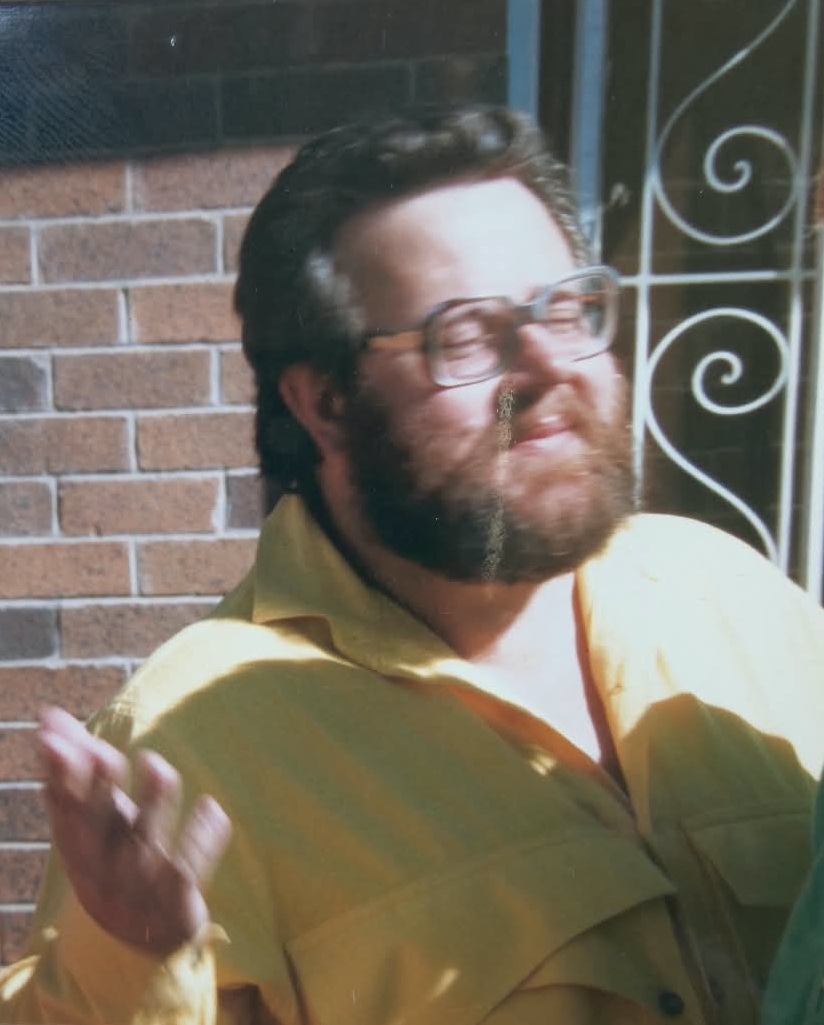
Their eventual meeting read like a scripted cinema encounter. Running into each other during an interval at a Hillbrow cinema, Ronge stumbled on the stairs. Van Dyk helped him up, each recognising the stranger they had seen dozens of times in the dark. The film playing that night was Nicolas Roeg’s 1976 surreal classic The Man Who Fell to Earth.
“Barry and I both fell to Earth in two different ways,” van Dyk reflected. “That was our romance, and that’s how it began.”
It is a vignette from an era where cinema was an event, a destination, and an act of devotion. Film appreciation required physical presence, patience, and immersion – elements increasingly diluted in an age of fragmented attention spans, second screens, and home-streaming saturation.
The Retreat: Privacy, Cellphones, and the ‘Young Guns’
The shift from the tactile, analogue world into the hyper-connected digital landscape also precipitated Ronge’s eventual departure from public life.
Van Dyk recounted the moment they sensed a cultural shift approaching: “There is a story that Barry wrote about the ‘young guns’ coming in, who were mocking and saying, ‘We can go and sit in a preview theatre, look at a movie, eat cake, eat popcorn, and write a review.’ And Barry said, ‘You know what, Albertus? Our time is coming.'”
When mobile phones emerged, the couple made an instinctual pact: they would never distribute their contact numbers to anyone in the industry, keeping them strictly between each other. “I said, ‘Barry, our privacy is forever gone,'” van Dyk recalled.
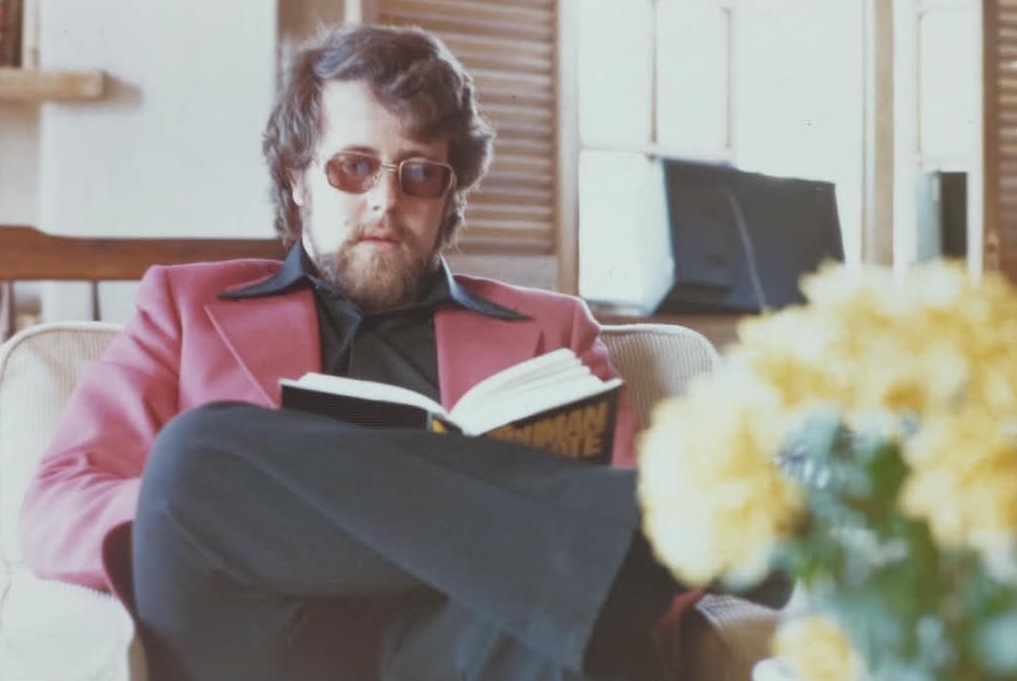
As physical illness compounded and the media ecosystem turned towards immediate, click-driven commentary, Ronge chose dignity over ubiquity. Guided by van Dyk, he quietly stepped out of the limelight, disappearing into a sacred domestic life until his death in 2022. He left behind a vast, four-decade footprint and a deafening silence where his voice once commanded the cultural desk.
From Peach Drapes to Moldering Archives: The Fragility of Culture
One of the most telling moments of the broadcast occurred when Hudson read a listener’s recollection of a vintage Spit ‘n Polish column. In it, Ronge chronicled his despair while watching an affluent woman enter an Exclusive Books to purchase fifty volumes – not on the basis of author, narrative, or genre, but under the sole mandate that the spines match the peach colour of her lounge drapes.
Van Dyk, who was standing beside Ronge that day, noted the bitter irony that persists today: “We’re in the same phase where we have to ask: do books really matter? Do physical things matter?”
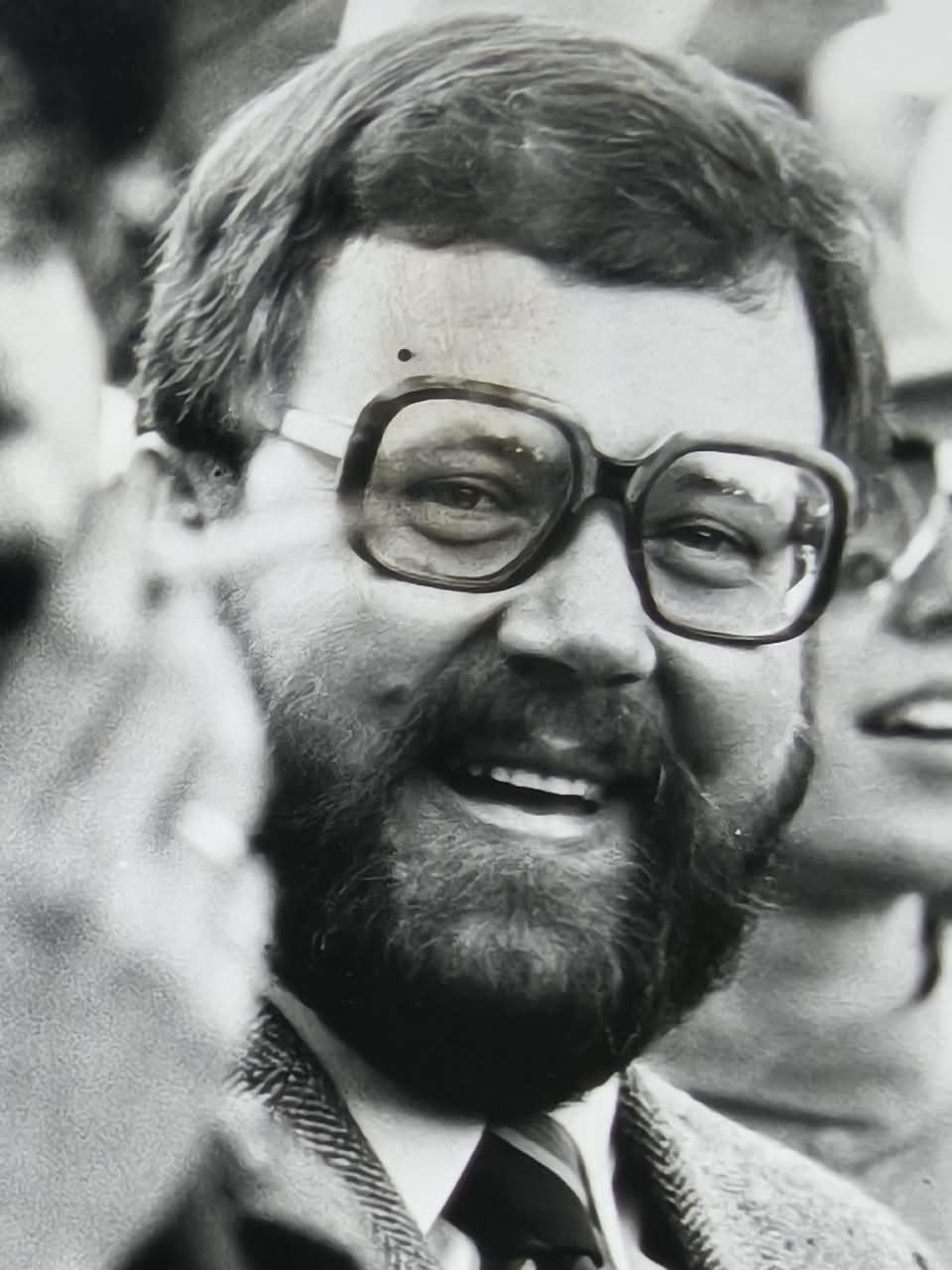
That question is no longer abstract. Following Ronge’s death, van Dyk inherited an astonishing private archive: thousands of physical books detailing cinema history, classic filmmaking, and lost eras of screen production. While discussions have taken place with institutions such as Amazwi National Literary Museum in Makhanda (Grahamstown) to house and curate the collection, the physical books sit in storage, threatened by mould and neglect. Van Dyk is currently attempting to scan and digitally index the volumes using his smartphone to ensure the intellectual repository is not lost forever.
It is a striking metaphor for the broader state of South African film history: without active, intentional curation, physical memory decays, and the algorithms do not care to replace it.
Reclaiming the Legacy
This cultural preservation is the driving force behind the documentary project currently being mounted by Sank and Aspeling. For the generation that grew up under Ronge’s tutelage, his status as an icon is undeniable. Yet, as Sank discovered while interviewing emerging South African creatives, younger filmmakers often have no concept of who Barry Ronge was.
“That was what stunned me,” Sank admitted. “Our generation was so influenced by him, but the younger generation don’t know about Barry. We have to immortalise him, his work and his contribution. But beyond that, there is this beautiful love story and a story of grief, connection, and the re-emergence of Albertus.”
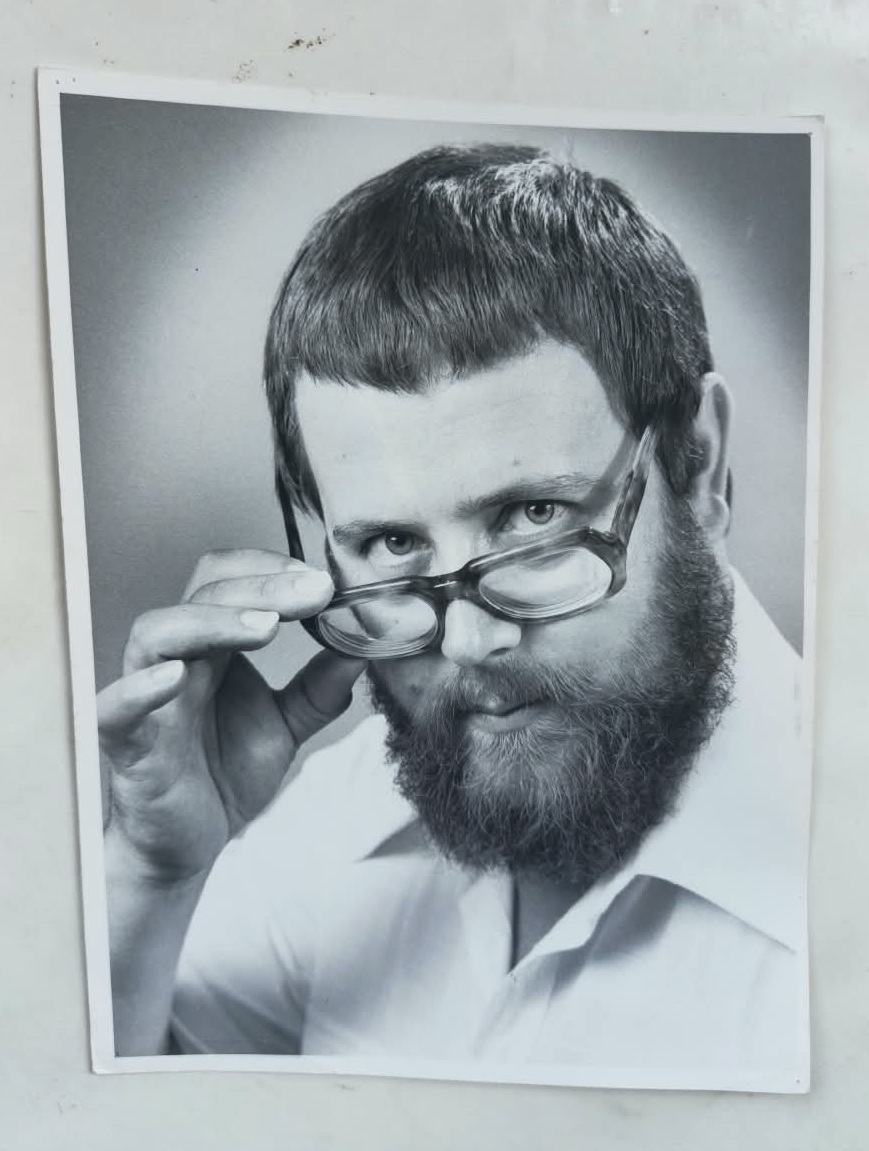
Navigating standard industry broadcasters and public funding bodies has proved difficult – a symptom of an industry often too under-resourced to look backward. As a result, the production team has turned to an independent crowdfunding campaign on BackaBuddy to finance the project.
For South African film critics, the documentary is more than a retrospective of an eccentric man in a colourful waistcoat. It is an examination of what the critical vocation can be at its absolute height. In a landscape saturated with press releases masquerading as reviews and aggregators replacing critical essays, Barry Ronge stands as a reminder of what is lost when we surrender individual, deeply cultured critical voices to the machines.
He was, in the end, what he appeared to be on the screen: authentic, exacting and passionately in love with the magic of cinema. Preserving that standard is not merely an act of kindness to his memory; it is an imperative for anyone who still cares about the craft of watching films.
To support the completion of this documentary, please visit barryronge.com where you will find links to the Backabuddy page.